Lots That Aren't Ready to Build On
Land Clearing in Eveleth for overgrown residential and commercial properties that cannot be developed, graded, or built on in their current condition
Much of the residential and rural property on the Iron Range sits on land that has been left untouched for decades, where second-growth birch, tag alder, and dense brush have reclaimed cleared ground or spread well beyond original property lines. Aspen Creek Land Clearing and Excavating works with residential and commercial property owners in Eveleth to remove that overgrowth and bring land to a usable, workable state. Whether the goal is a new home site, an expanded yard, or a commercial development pad, the clearing process determines what every subsequent step of construction can accomplish.
The work begins with a site assessment to identify what needs to come out, what can stay, and how material will be removed or processed. Residential lot clearing addresses overgrown vegetation, brush, and trees that block grading and building. Commercial land clearing is scoped differently, accounting for larger acreage, debris volumes, and development timelines. Brush and underbrush removal targets the dense ground-level vegetation that persists even after tree removal, and construction site clearing creates a clean, debris-free surface so excavation and foundation work can begin without interference from buried root masses or slash piles.
Arrange an on-site review to assess your property's current condition and determine the scope of clearing required.
Clearing a lot isn't limited to cutting trees down. Root systems left in the ground will heave, decompose unevenly, and create voids that destabilize any surface placed above them—which means clearing done correctly addresses what's below grade as well as what's visible above it. The sequence matters: brush and smaller vegetation typically come out first so equipment operators have clear sightlines and movement paths before large trees are felled and processed.
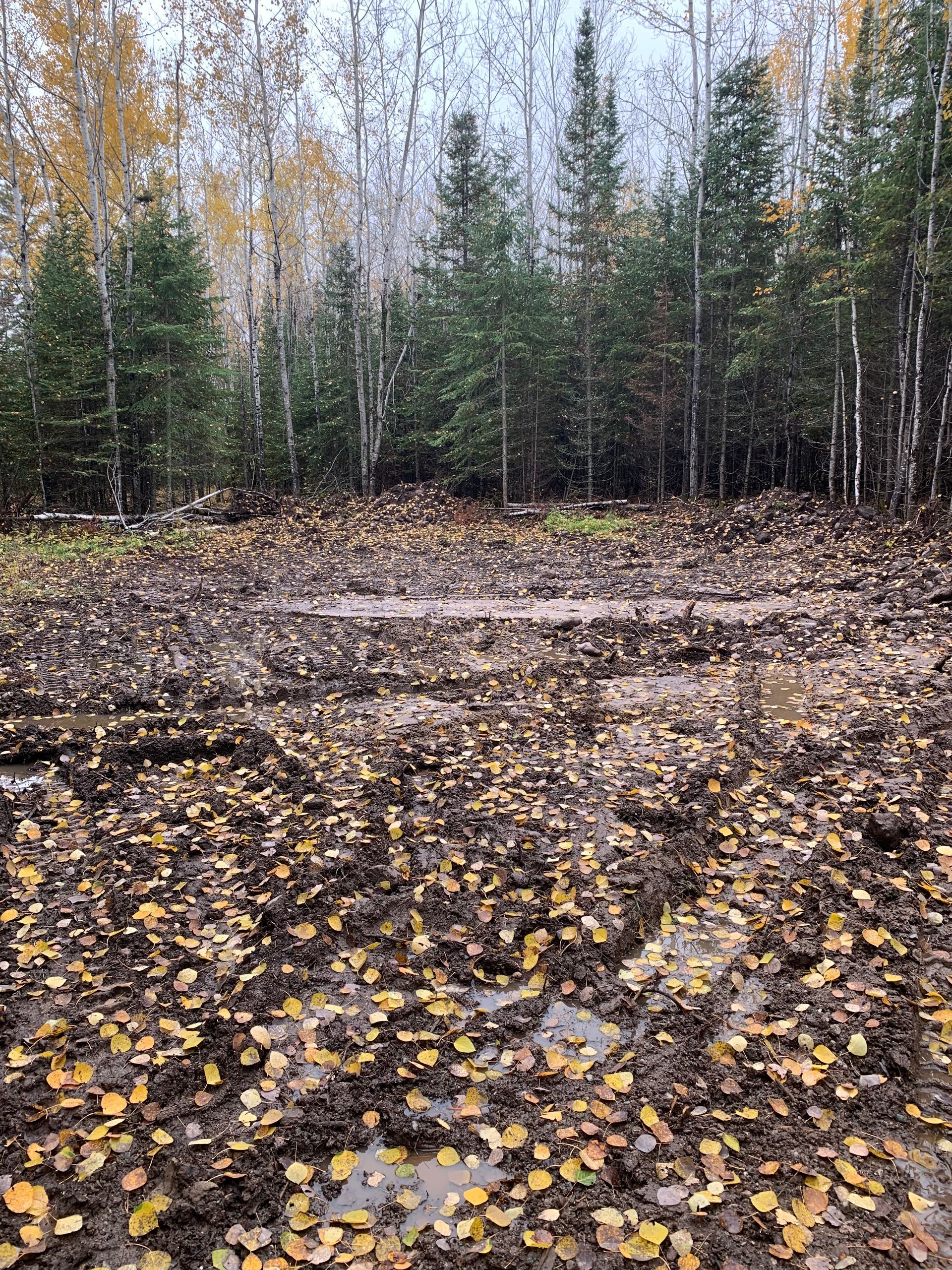
Once clearing is complete, the difference is immediately visible in what the property can accept next. Grading equipment can move across the site without obstruction, soil can be evaluated accurately for compaction and drainage, and staking for foundations or driveways reflects actual grade rather than estimated positions around standing vegetation. Properties that arrive at the grading phase with clearing already done correctly move through subsequent construction stages without the delays caused by incomplete stump removal or buried debris.
The scope of clearing also affects how material is handled after removal. On some sites, cleared timber and brush can be chipped or piled for later use. On construction sites where a clean surface is the priority, material is removed from the site entirely. These decisions are made based on what the property will be used for and what the development timeline requires, not as a fixed process applied identically to every lot.
Questions About How Land Clearing Works
Property owners preparing a site for the first time often have practical questions about what clearing involves and what the land looks like once the work is finished.
What happens to trees and brush after they are removed from the property?
Depending on the site and its intended use, cleared material is either chipped on-site, piled for removal, or hauled away entirely. Construction sites typically require full material removal so grading equipment can work without navigating debris piles.
How does clearing differ for a residential lot compared to a commercial development site?
Residential lot clearing is usually scoped around a single structure footprint and yard area, while commercial clearing accounts for larger acreage, heavier equipment access routes, and phased construction timelines that may require clearing in sections.
What does land look like when clearing is finished and ready for the next phase?
A properly cleared site has no standing brush or trees within the project boundary, stumps are removed to a depth that allows grading, and the surface is free of slash and debris that would interfere with equipment or soil work.
Why does stump removal matter if the stumps are already cut to ground level?
Stumps left at or near grade level decompose unevenly over years, creating soft spots and voids that compromise compaction. Grading over unremoved stumps produces an unstable surface that causes settlement problems in driveways, slabs, and foundations.
How do older rural properties in the Eveleth area affect clearing scope compared to newer subdivisions?
Rural Iron Range properties frequently have decades of untouched regrowth with established root systems and multiple tree species layered together, which requires more deliberate sequencing than clearing a recently platted lot where vegetation is younger and less entrenched.
Aspen Creek Land Clearing and Excavating is available to walk your property and identify exactly what clearing scope your project requires before any work begins. Contact Aspen Creek Land Clearing and Excavating to schedule a site visit and discuss what your lot needs to move to the next phase of development.